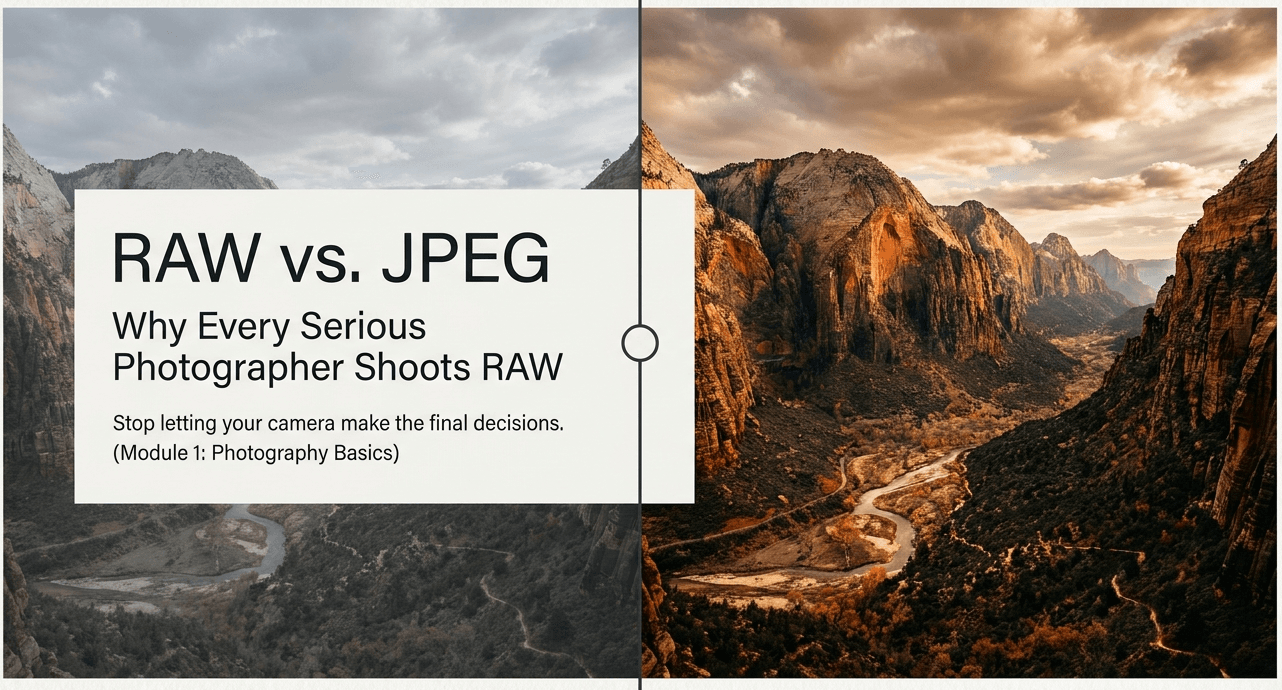
Why Every Serious Photographer Shoots RAW
When you use a camera you will see that you have a choice between two things: RAW and JPEG. Most people who are just starting out do not think about this choice because JPEG is usually the default setting.. This one setting decides how much control you will have over every single photo you take.
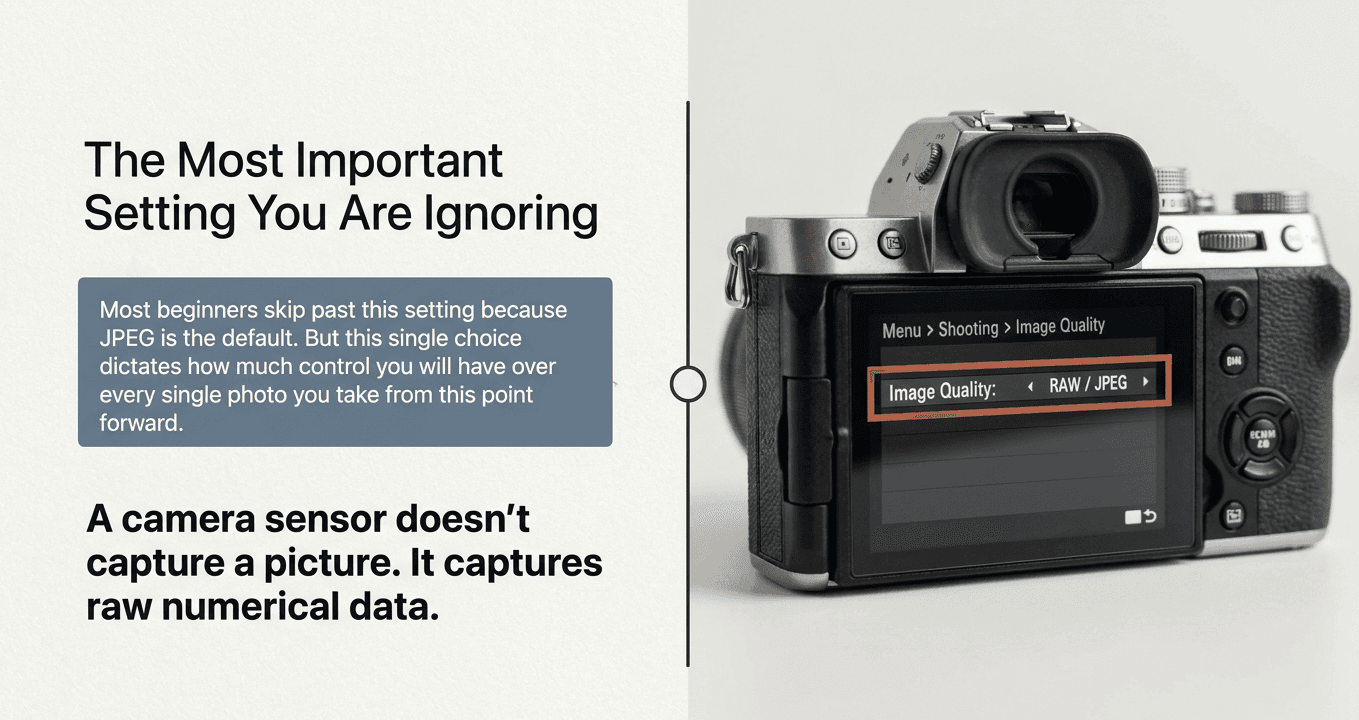
A sensor in a camera does not capture a picture it captures numbers. RAW and JPEG are two ways to use those numbers.
What actually happens the moment you press the shutter.
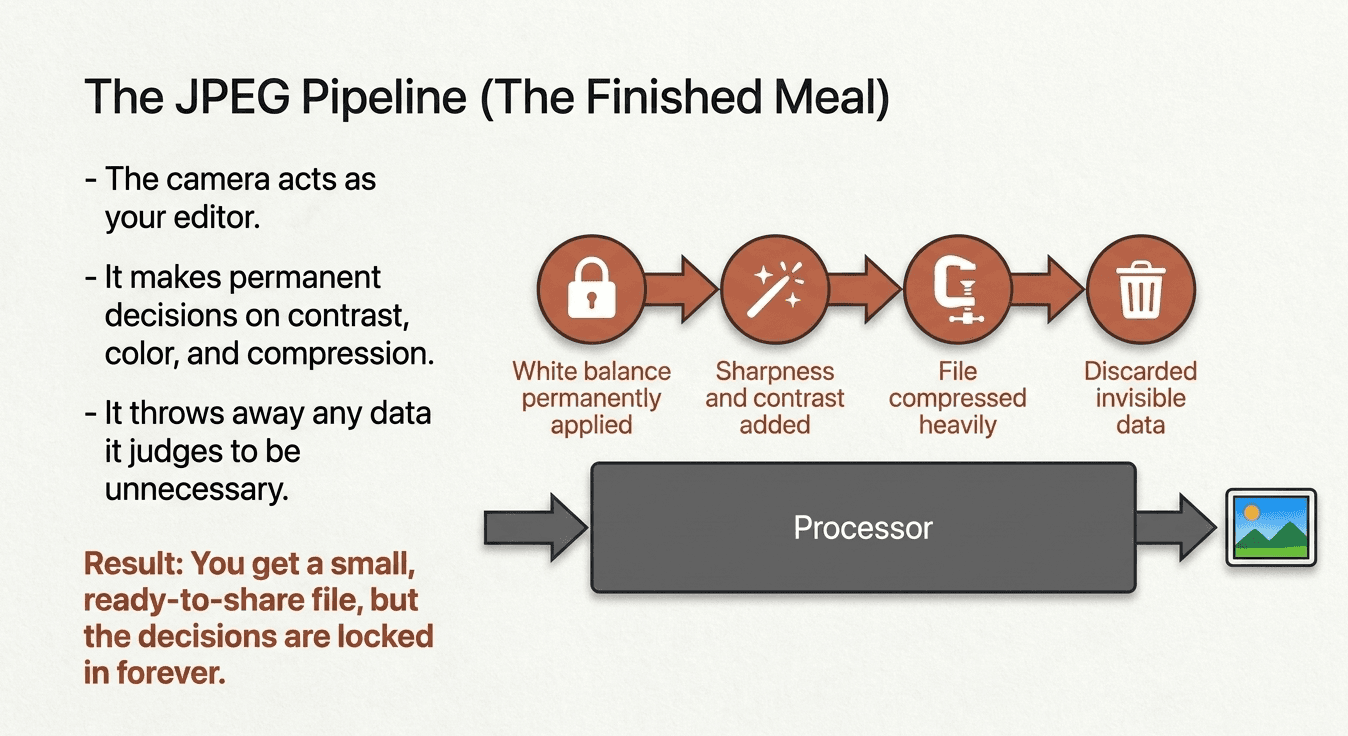
If you are using JPEG, the camera makes some decisions for you. It changes the white balance makes the picture sharper and changes the contrast and colors. Then it makes the file smaller by getting rid of some of the information. This makes a file that you can share but you cannot change some of the decisions the camera made.
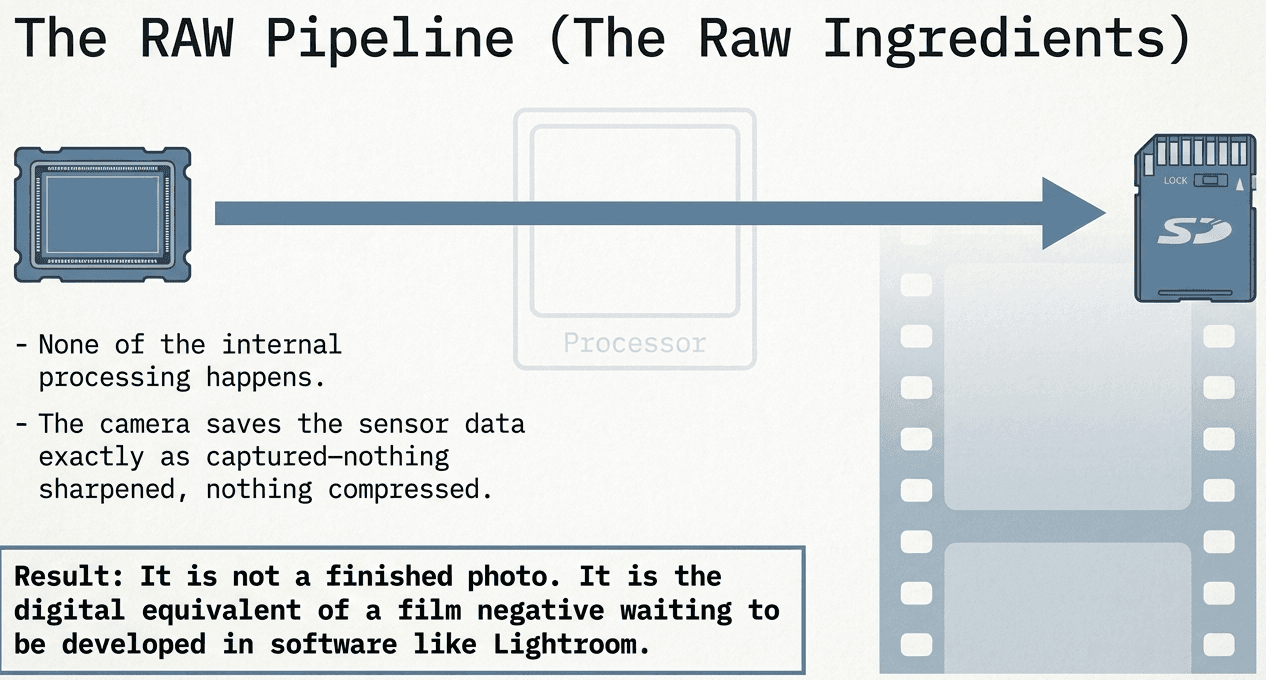
If you are using RAW the camera does not make those decisions. It saves the numbers from the sensor exactly as they were captured. This means that the file is not really a photo yet. You need to use software to make it look good.
There are four things that really matter when you are deciding between RAW and JPEG.
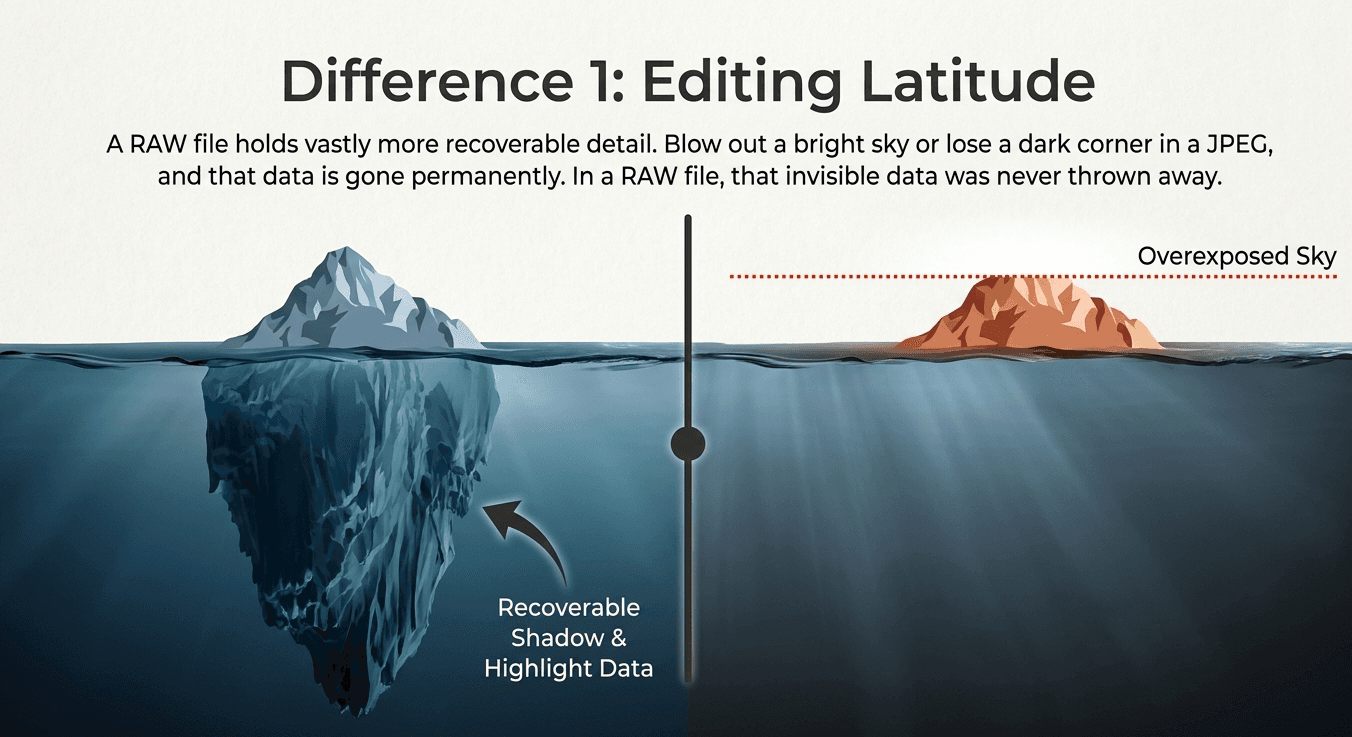
1. How much you can change the photo(Editing Latitude).
A RAW file has more information in it than a JPEG file. This means that you can change the photo without losing any of the details.
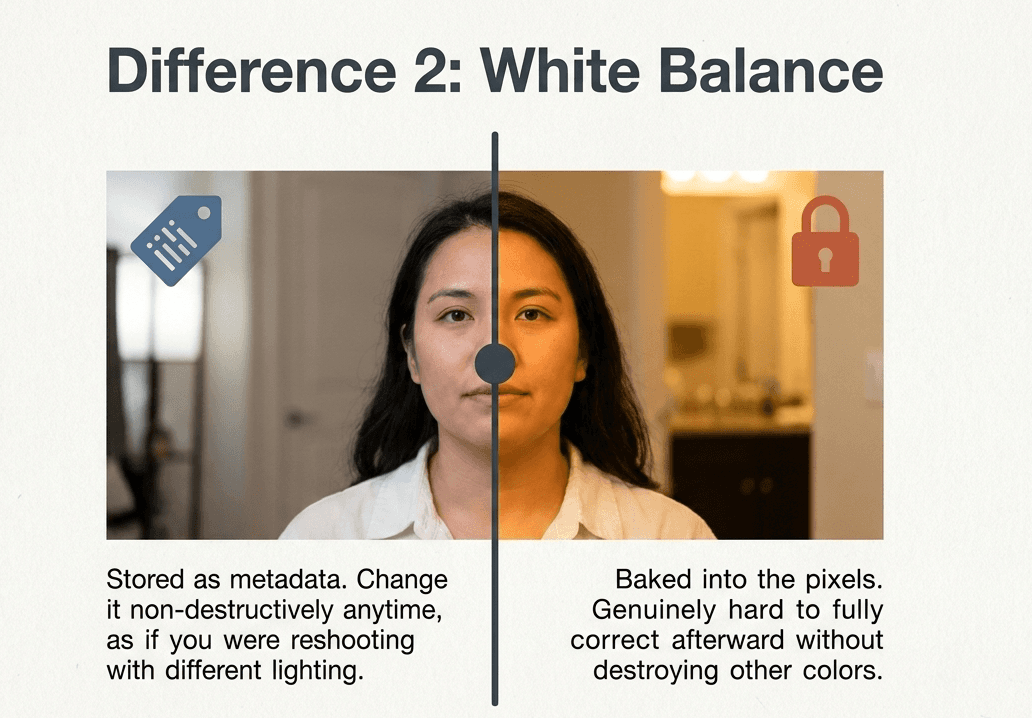
2. White balance.
When you use JPEG the white balance is decided when you take the photo. If you get it wrong it is hard to change it. When you use RAW the white balance is a tag on the file. You can change it later without any problems.
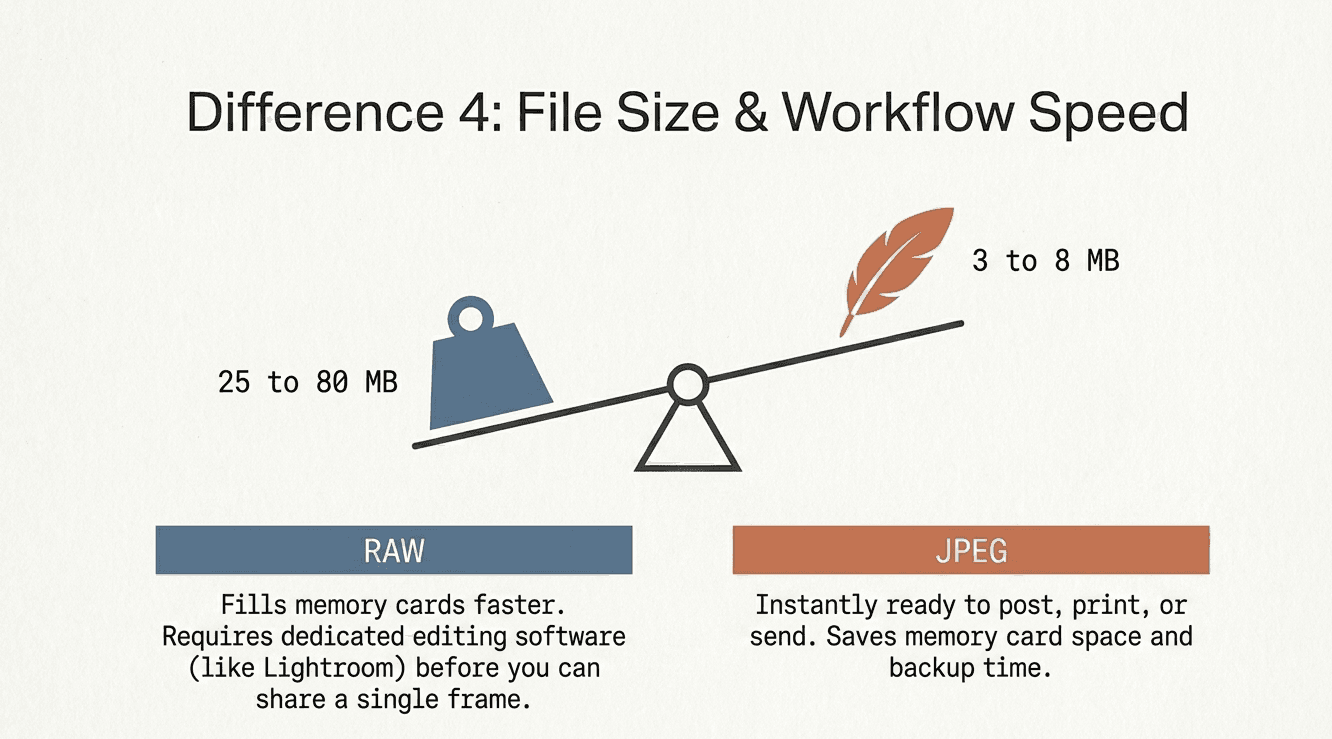
3. How big the file and workflow speed.
JPEG files are small 3 to 8 MB. RAW files are usually 25 to 80 MB. This means that RAW files take up space on your memory card and take longer to back up.
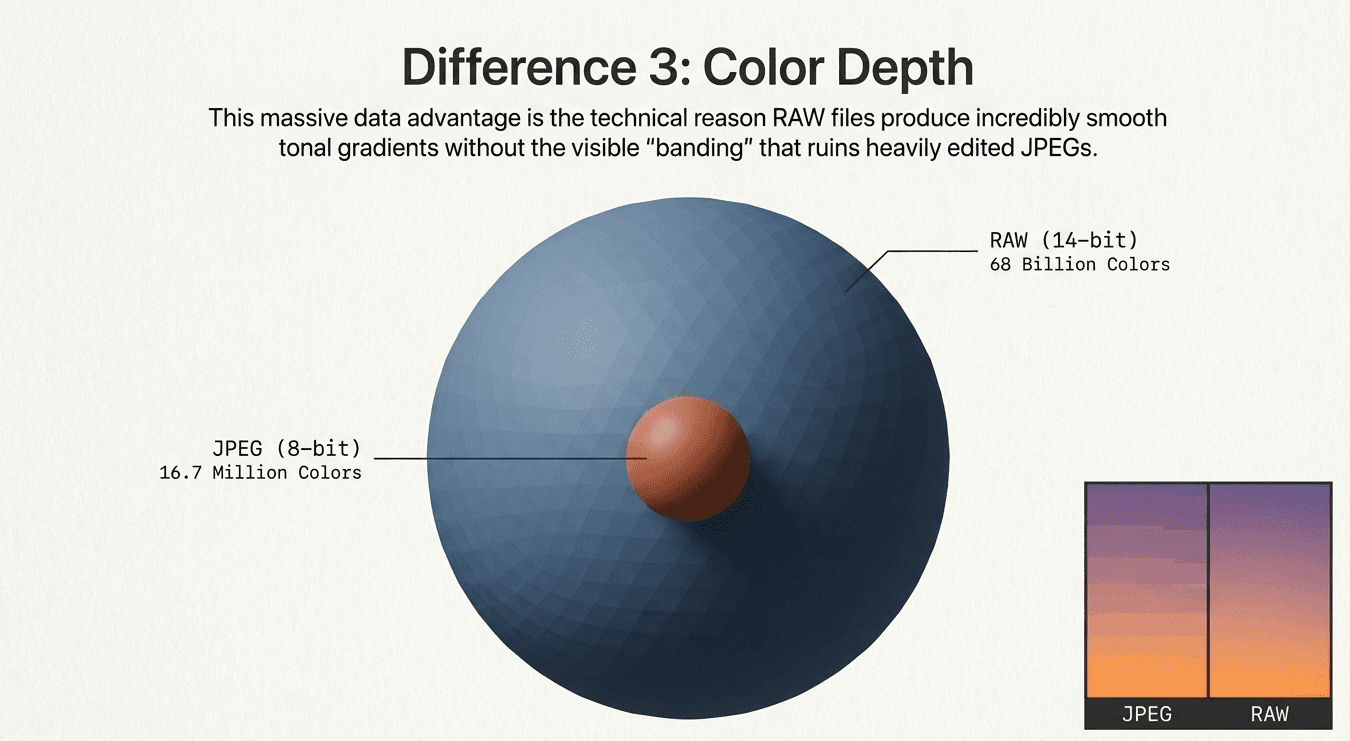
4. Color Depth.
JPEG files can have about 16.7 million colors. RAW files can have over 68 billion colors. This means that RAW files can have colors and more details.
So should you use RAW or JPEG?
If you are just starting out here is what we tell our students:
Shoot RAW if:
You want to learn how to edit photos and you want to have control. Shoot RAW if you are taking photos in lighting and you might need to change the exposure or white balance later. Shoot RAW if you are taking photos that're important to you and you want to make sure they are the best they can be.
Shoot JPEG if:
you need to share your photos away and you do not want to edit them. Shoot JPEG if you do not have a lot of space on your memory card.
Most photographers use both RAW and JPEG at the time. This way you get a JPEG file that you can share right away and a RAW file that you can edit later.
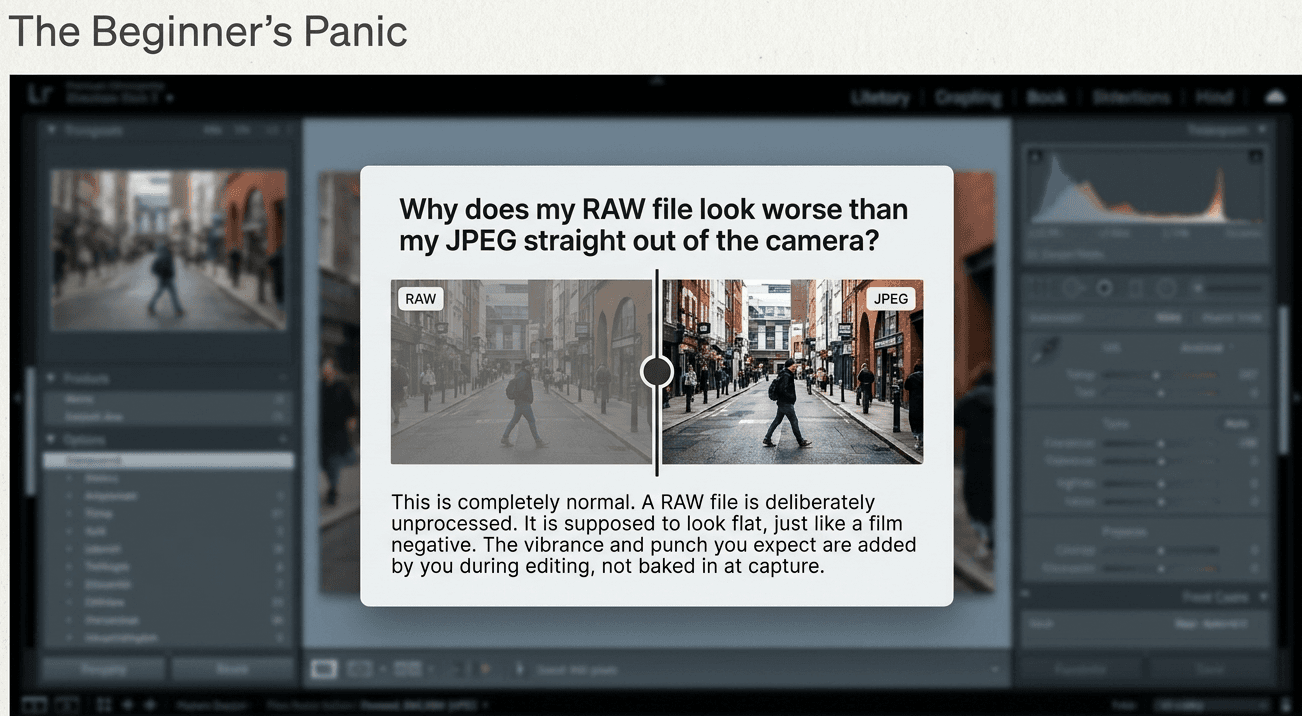
Sometimes new photographers make a mistake. They shoot RAW. They do not use the right software to edit the photos. This means that the photos look flat and dull.. This is normal. RAW files are supposed to look like that before you edit them.
What is next in this series?
We will talk about how to hold a camera and how to fix blurry photos. Then we will talk about the exposure triangle. How to use aperture shutter speed and ISO.
You can learn more about editing RAW files at zyamaru films academy. We teach you how to capture RAW files and how to edit them to make them look professional.
Shooting RAW is only half the skill — developing it into a finished image is the other half, and it's where Lightroom becomes essential. At Zyamaru Films Academy in Tahachal, Kathmandu, our Basic Photography to Cinematography course covers both sides: capturing strong RAW files in-camera, and developing them into polished, professional images, taught by an industry-active cinematographer over one month, six days a week or basic course 10 days.
Turn Passion Into Profession.
Frequently asked questions
Do RAW files look worse than JPEG straight out of the camera?
They usually look flatter and less contrasty, yes — this is expected, not a problem. RAW files are designed to be edited, not viewed as a finished result straight away.
Will shooting RAW slow down my camera?
Slightly, in some cases — RAW files are larger, so burst shooting speed and buffer clearing can be a little slower than shooting JPEG, especially on older or entry-level cameras. For everyday and portrait shooting, the difference is rarely noticeable.
Can I convert a JPEG back into a RAW file later?
No. Once a camera compresses and processes an image into JPEG, the discarded data is permanently gone — there's no way to recover a true RAW file from it afterward. This is exactly why the RAW-or-JPEG decision has to be made at the moment of shooting, not after.