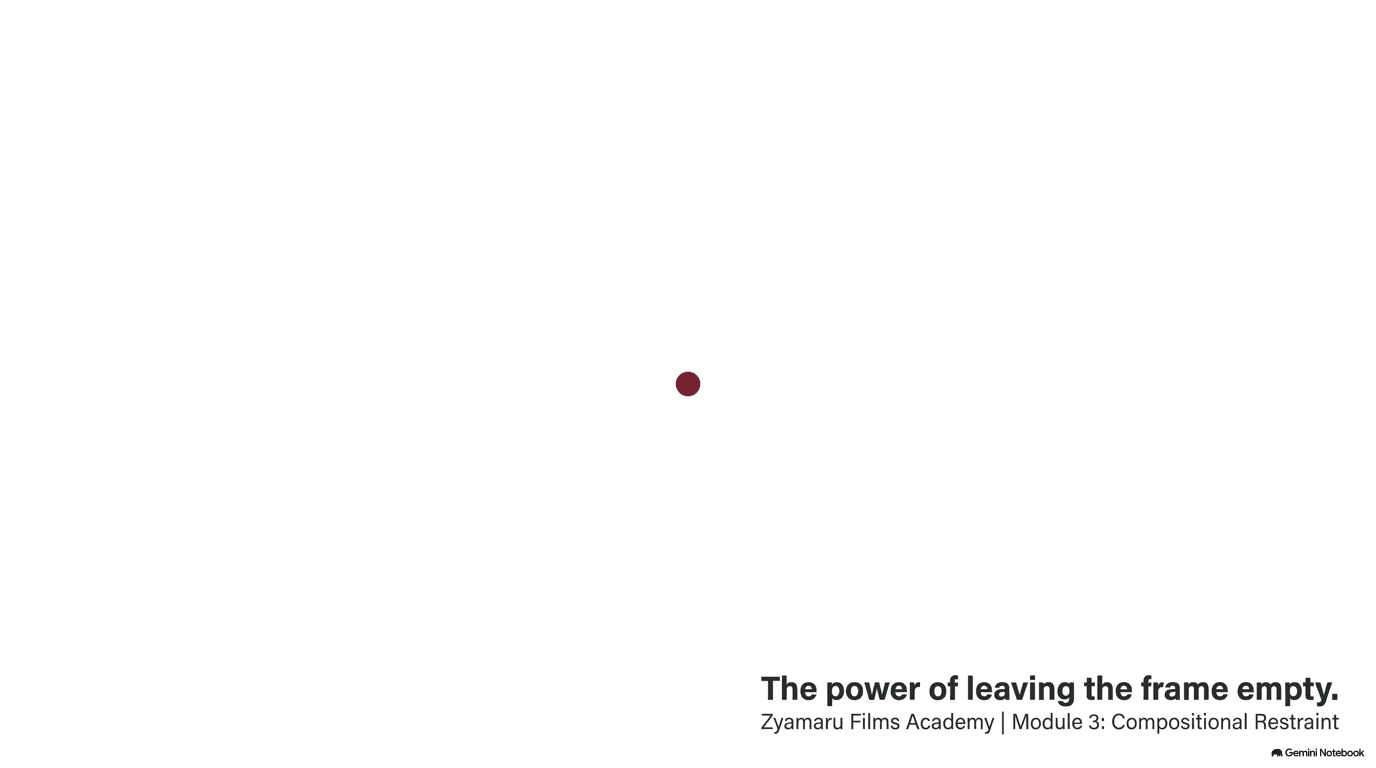
Negative Space: Why Empty Space Can Make Your Photo Stronger
Every technique in this module so far has been about adding something to your composition — a grid position, a leading line, a frame. This post is about the opposite instinct: deliberately leaving parts of your frame empty, and why that emptiness can make your subject stronger, not weaker.
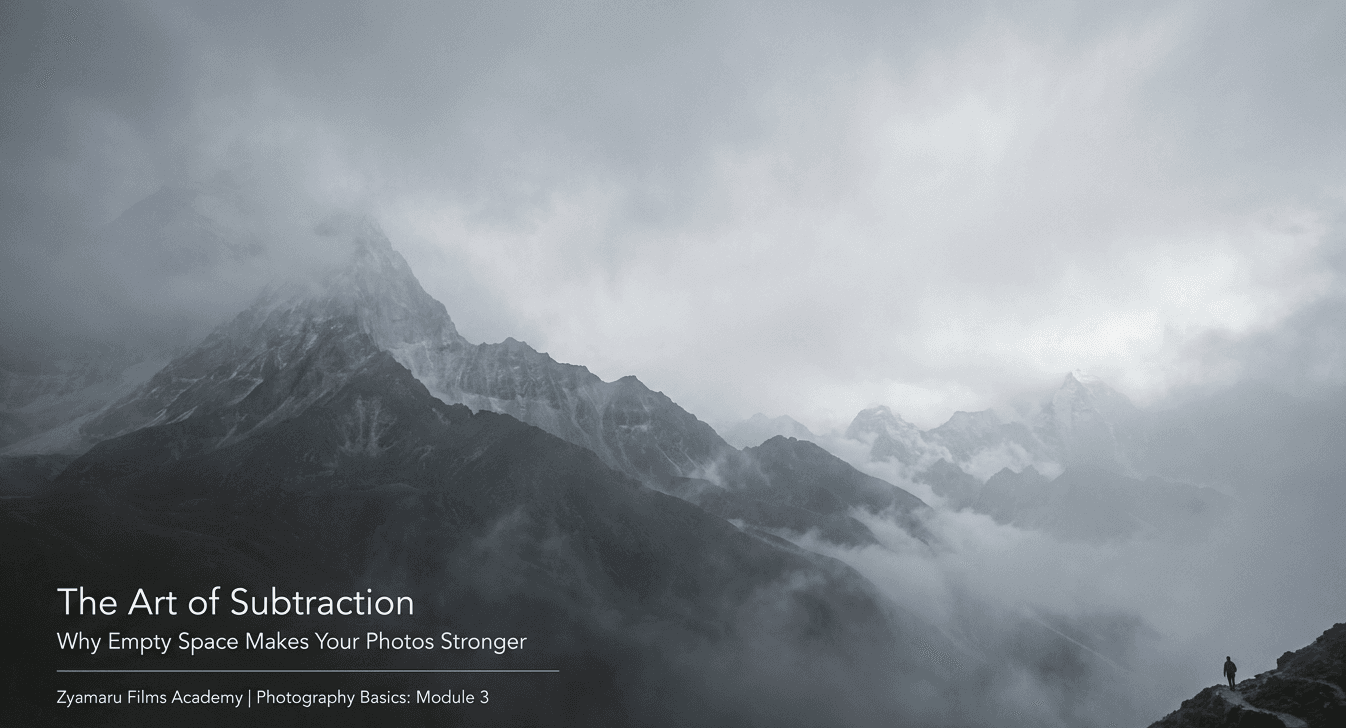
This is one of the harder composition habits for beginners to trust, because it feels counterintuitive. Shouldn't a good photo be full of interesting things? Often, no — and understanding why is what this post is about.
What negative space actually is
Negative space is the empty, plain, or visually quiet area of a photo that surrounds your main subject — a blank sky, a smooth wall, a still stretch of water, an out-of-focus background. Positive space is your actual subject — the thing the photo is about. Negative space isn't "wasted" frame; it's an active compositional choice that gives your subject somewhere to exist without competing for attention.
Why empty space actually strengthens a subject
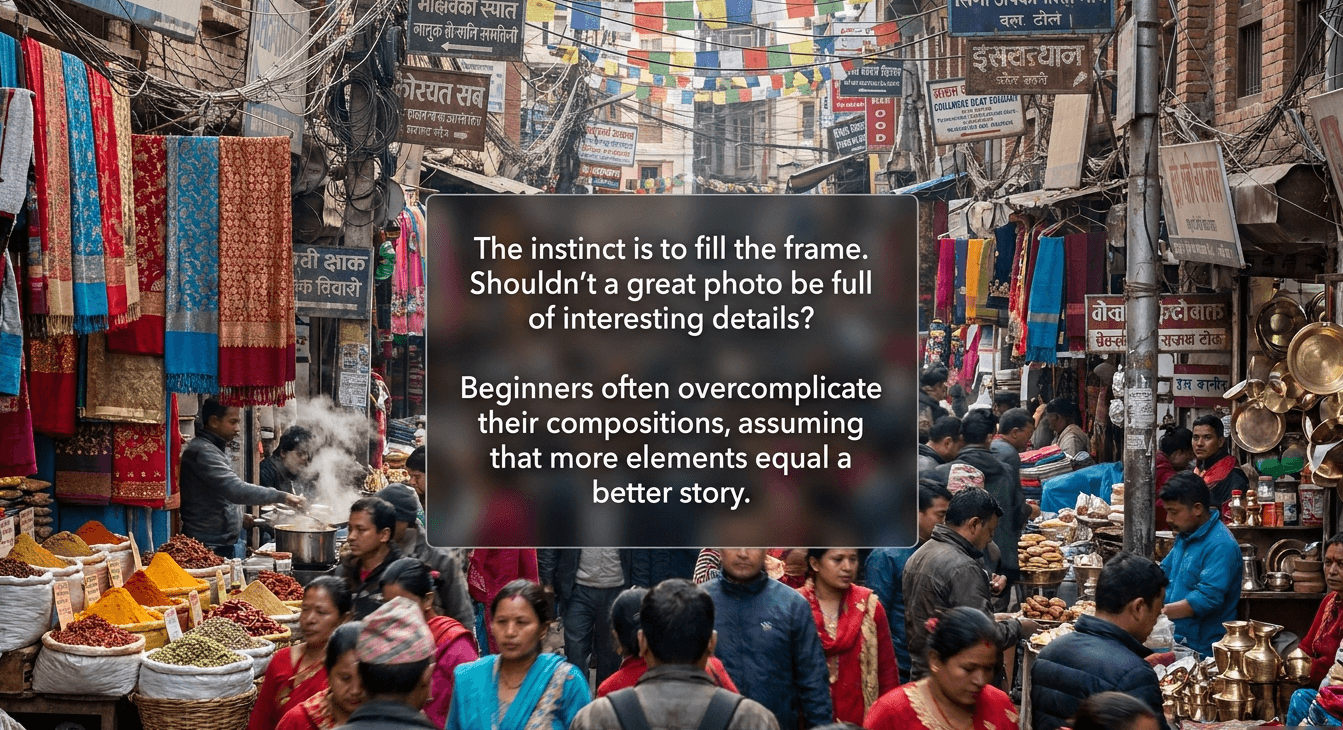
Think about how attention works in a cluttered versus a quiet scene. In a frame packed with competing shapes, colors, and details, the eye doesn't know where to settle — everything is fighting for attention at once, so nothing really wins.
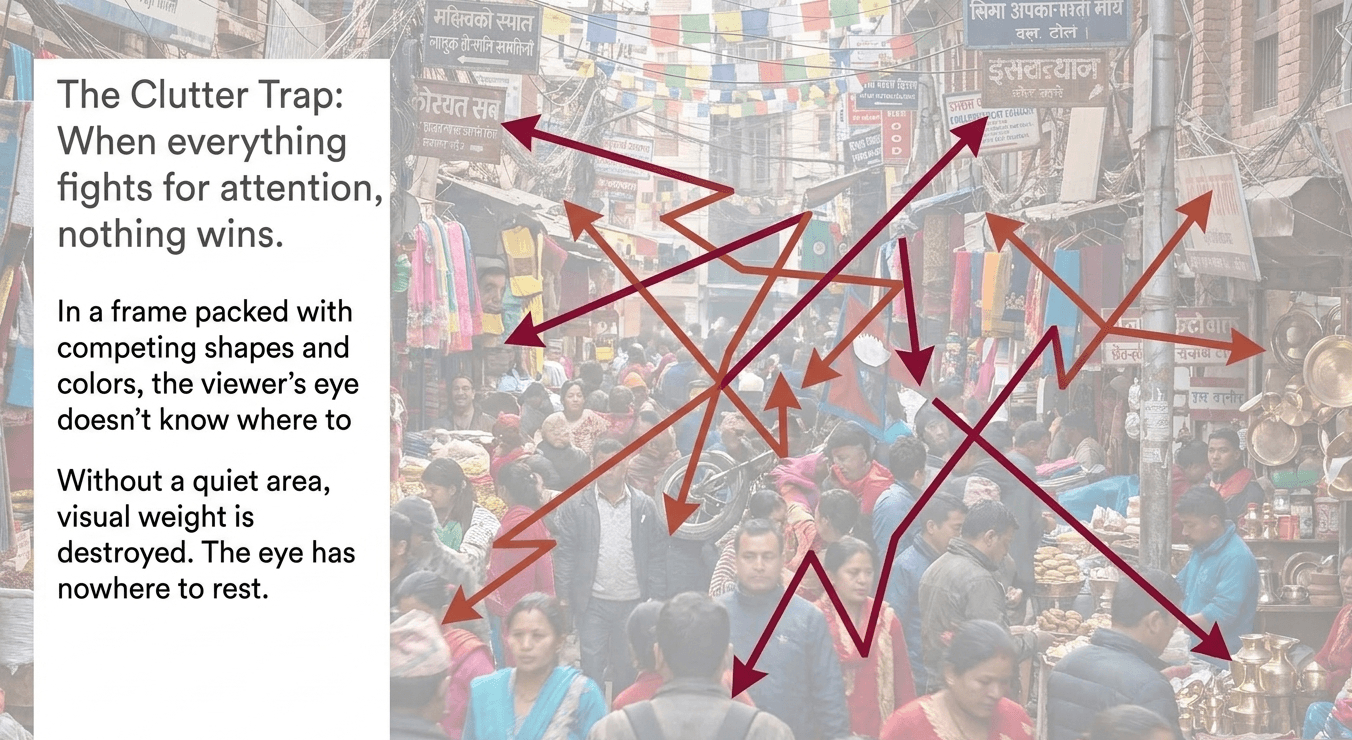
Remove that clutter, and whatever remains — even something small — instantly becomes the entire focus of the frame. Negative space works by subtraction: it makes a subject feel important specifically because it's the only thing there.
Real examples: negative space doing real work
Example 1 — A lone monk walking near Boudhanath Stupa:
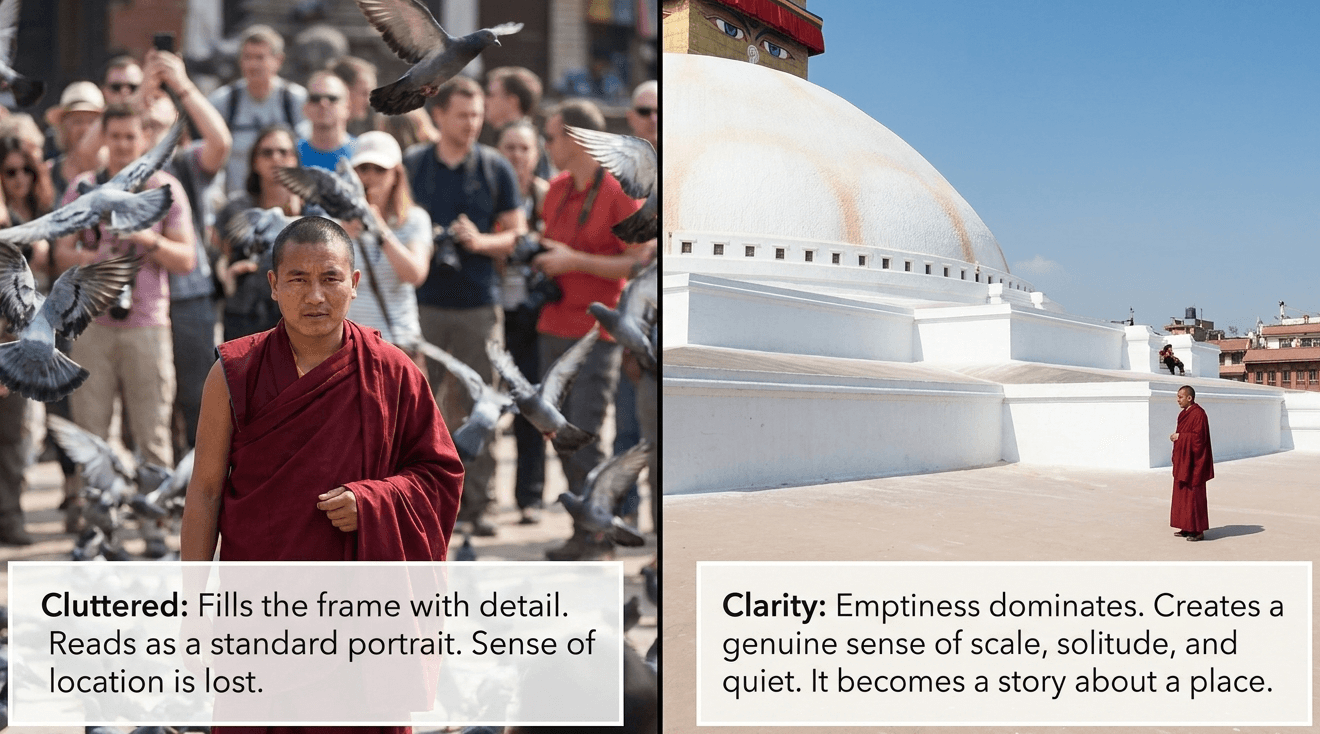
Photographing a single monk in maroon robes against the vast, plain expanse of the stupa's white dome, with the monk placed small in the frame off to one side, creates a genuine sense of scale, solitude, and quiet. Crop in tightly on the monk alone, filling the frame with detail, and that entire sense of scale and stillness disappears — you'd just have a portrait, not a story about a place.
Example 2 — A single prayer flag against the sky at Nagarkot:
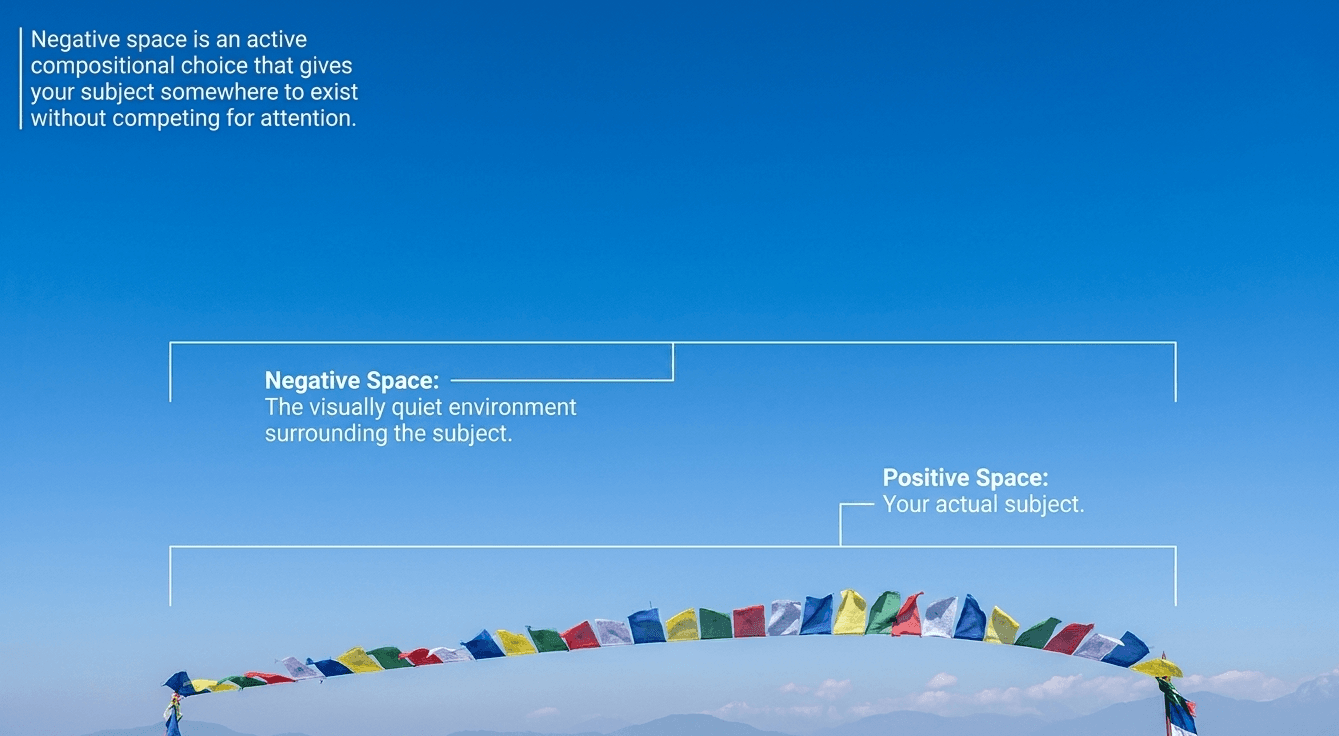
A single string of prayer flags placed low in the frame, against a huge, plain sky taking up most of the composition, gives the flags real visual weight despite occupying a tiny fraction of the actual frame. The emptiness of the sky isn't a missed opportunity to add more — it's the entire reason the flags read as significant.
Example 3 — A minimalist product shot for Zyamaru Films Store: Photographing a single lens against a plain, evenly lit background, with generous empty space around it rather than filling the frame edge-to-edge, produces a cleaner, more premium-feeling result — exactly the kind of restraint professional product photography relies on.
Negative space and the rule of thirds work well together
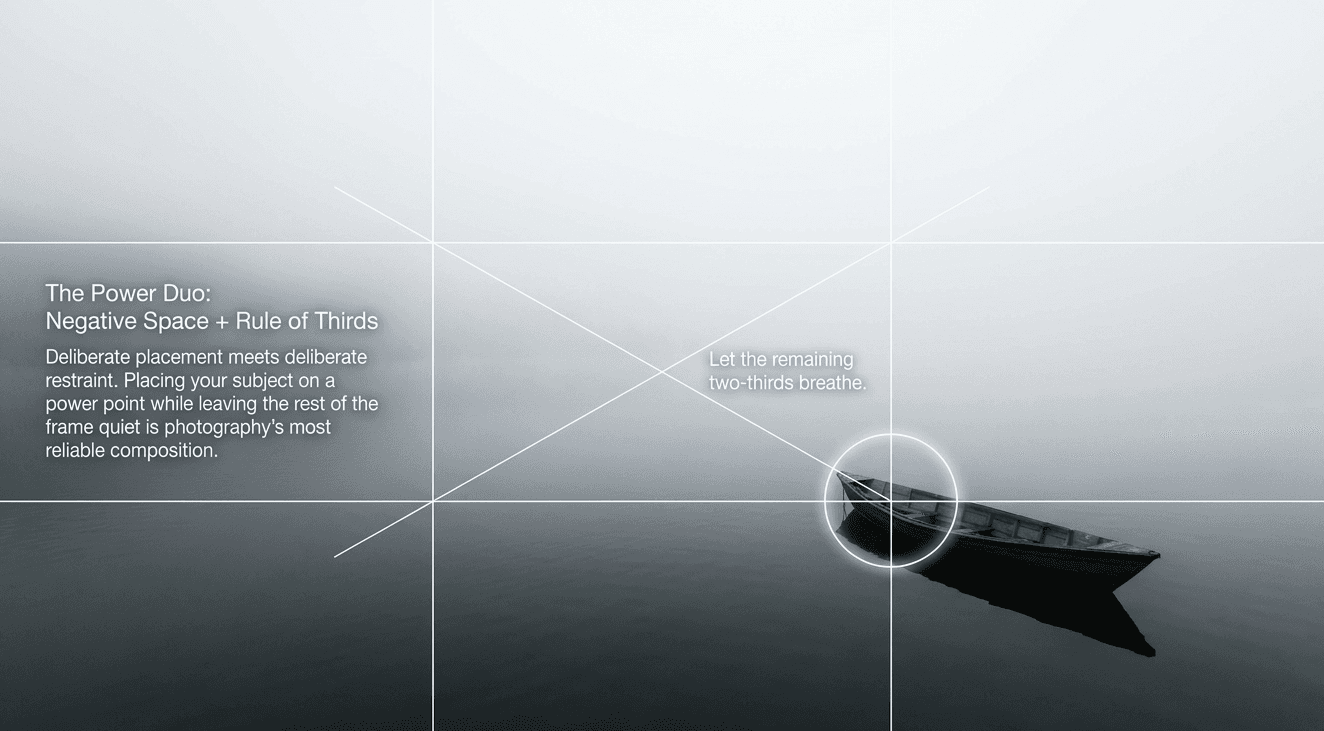
Placing your subject on a power point (from the first post in this module) while letting the remaining two-thirds of the frame stay empty or visually quiet is one of the most reliable compositions in photography — it combines deliberate placement with deliberate restraint, and the two techniques reinforce each other rather than competing.
How to create negative space deliberately
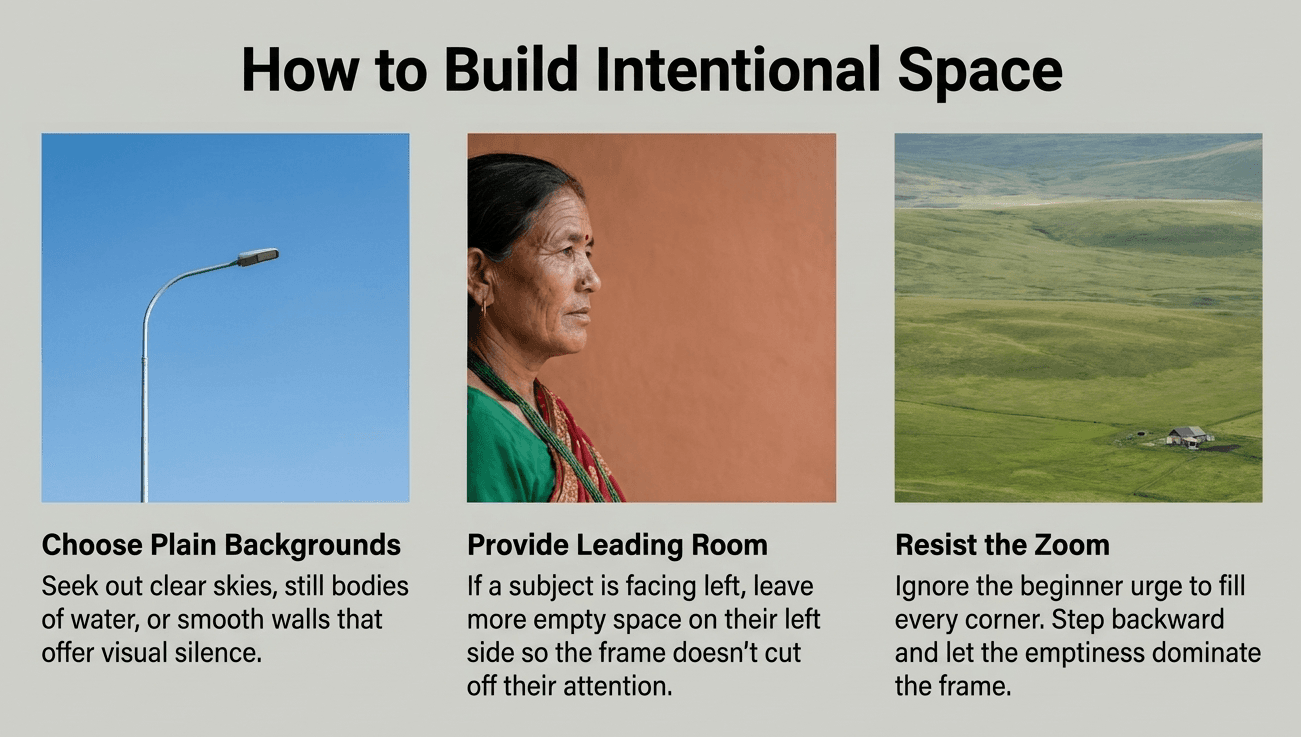
-
Choose plain backgrounds intentionally — a clear sky, a still body of water, a smooth wall, an out-of-focus background from a wide aperture (Module 2's aperture post covers exactly how this works)
-
Give your subject room to "move" into — if a person is facing left, leave more empty space on their left than their right, so the frame doesn't feel like it's cutting off their attention
-
Resist the urge to fill every corner — a beginner instinct is to zoom in or move closer until the frame feels "full." Sometimes stepping back and letting emptiness dominate is the stronger choice
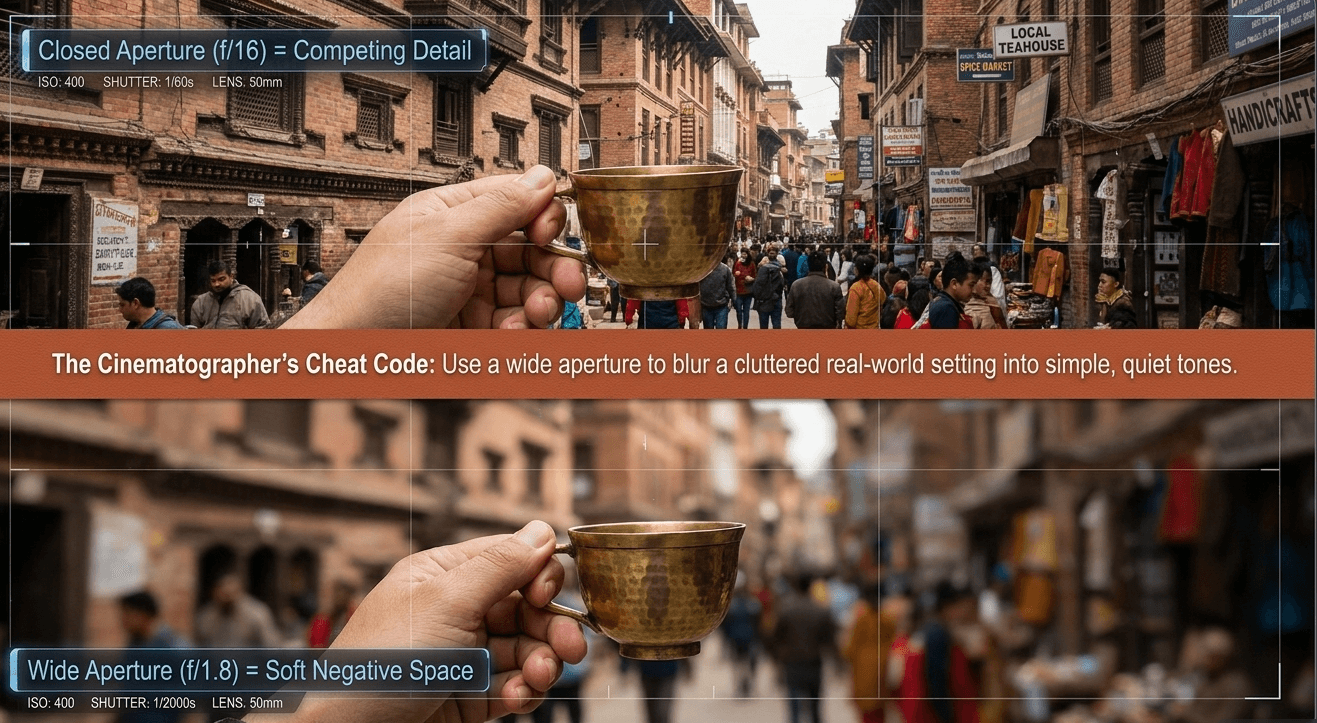
-
Use a wide aperture to simplify a busy background into soft, quiet negative space, even when the actual location isn't empty — this is a technique cinematographers use constantly to isolate a subject from a cluttered real-world setting
A common beginner mistake: confusing negative space with a boring, empty photo
New students sometimes worry that leaving so much empty space in a frame will just look like an accident, or like nothing is happening. The difference between an intentional negative space composition and an accidentally empty photo comes down to two things: deliberate subject placement (usually on a power point, not just floating anywhere) and a background genuinely simple and calm enough to read as a choice rather than a mistake. If the empty area still has distracting clutter in it, it isn't functioning as true negative space yet.
A practice drill: shoot the same subject two ways
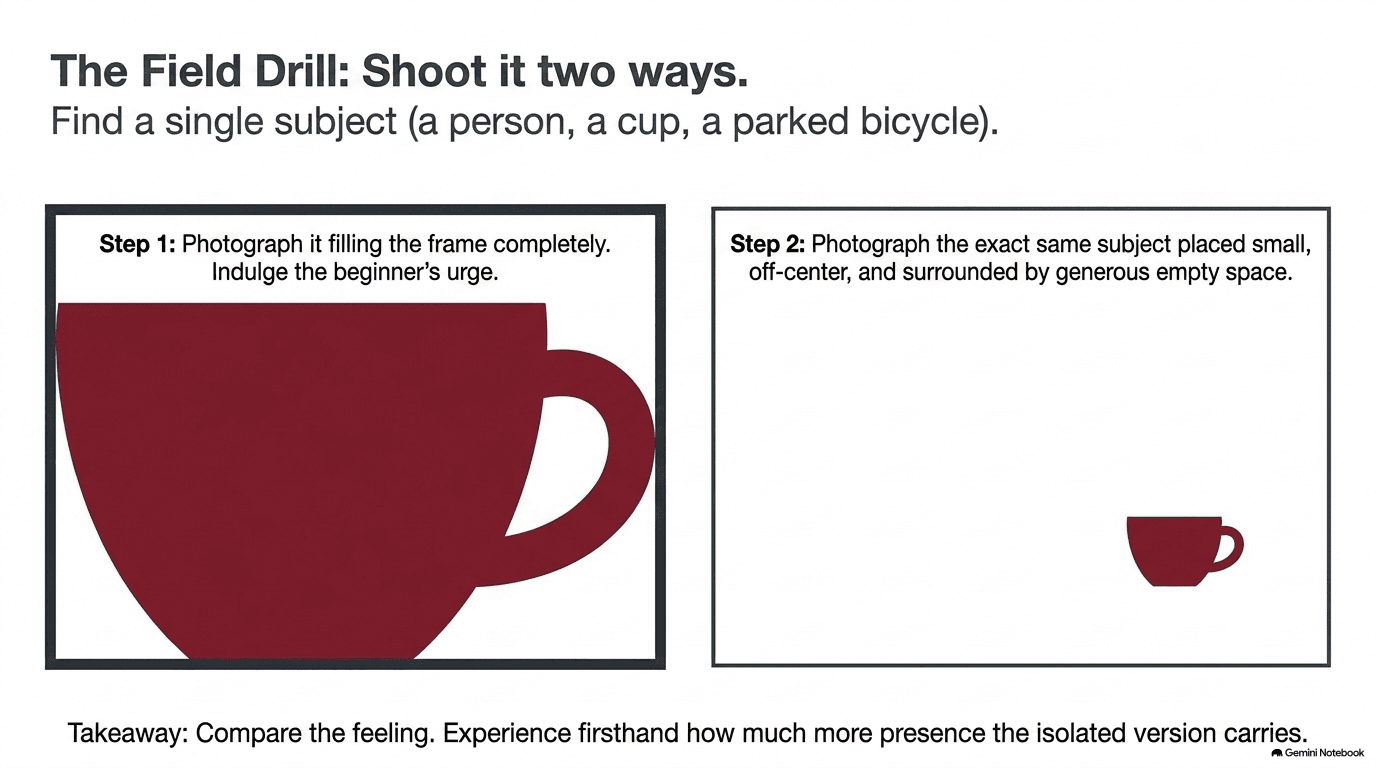
Find any single subject — a person, a cup, a parked bicycle — and photograph it twice: once filling the frame as much as possible, and once with the subject small and off-center, surrounded by generous empty space. Compare how differently each version feels. Most students are surprised at how much more presence the smaller, more isolated version can carry.
What comes next in this module
- Foreground, Midground, Background — creating a sense of depth in a flat, two-dimensional image
- When to Break Composition Rules — and why rules are guidelines, not laws
- Perspective & Angles — how camera height changes the entire story of a photo
Learn to simplify a frame hands-on at Zyamaru Films Academy

Knowing when to add to a composition and when to strip it back is a judgment call that sharpens with real practice and real feedback — it's a core part of the visual training in our Basic Photography to Cinematography course at Zyamaru Films Academy in Tahachal, Kathmandu, guided by an industry-active cinematographer.
Turn Passion Into Profession.
Frequently asked questions
What is negative space in photography?
Negative space is the empty or visually quiet part of a photo surrounding the main subject — like a plain sky, wall, or blurred background — which gives the subject visual weight and focus by removing competing detail.
Does negative space make a photo boring?
Not when it's used deliberately. A subject placed intentionally within generous, calm empty space usually reads as confident and considered, not empty or accidental, especially when combined with strong subject placement like the rule of thirds.
How can I create negative space if my location is busy or cluttered?
Using a wide aperture to blur a cluttered background into soft, simple tones, or reframing to include more plain sky, wall, or ground around your subject, are both effective ways to create negative space even in a visually busy real-world location.