DSLR vs Mirrorless vs Smartphone: Which Camera Should a Beginner Buy?
This is the single most common message we get at Zyamaru Films Academy before someone even enrolls: "Sir, which camera should I buy first?"
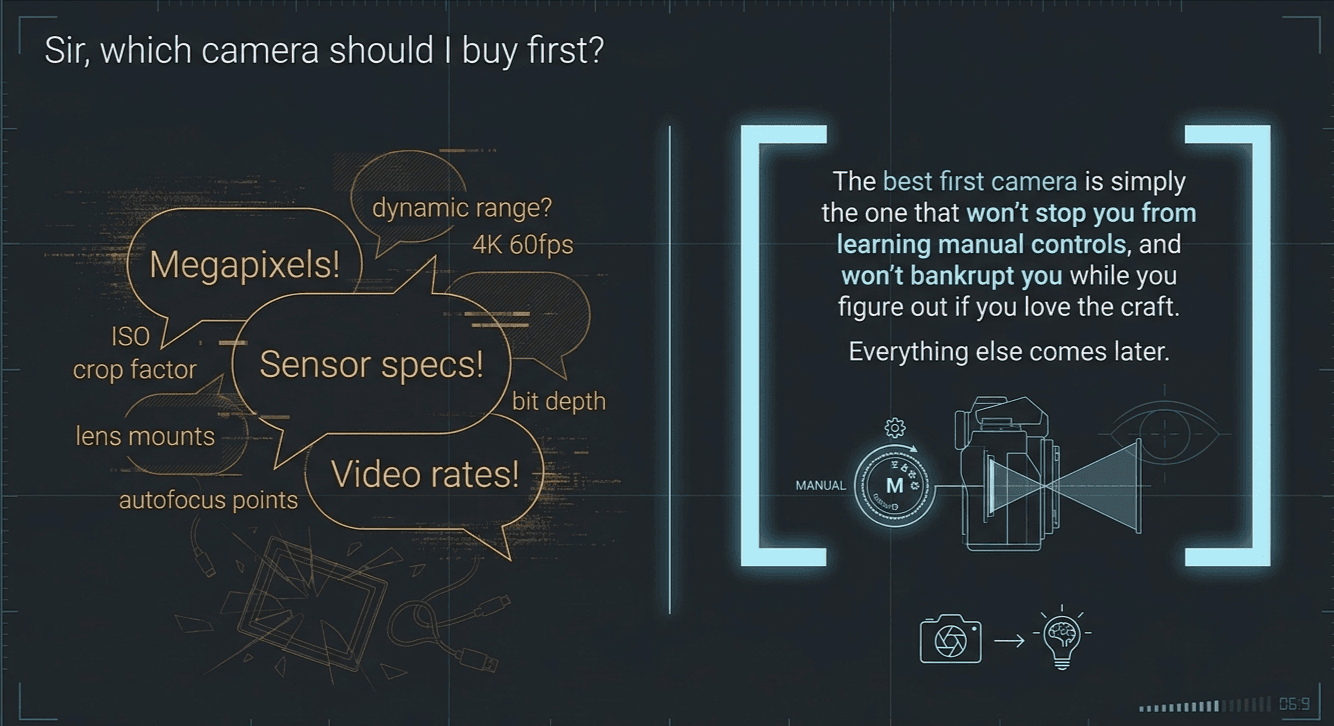
The honest answer usually disappoints people, because it isn't a model number. It's this: the best first camera is the one that won't stop you from learning manual controls, and won't bankrupt you while you figure out if you even love this. Everything else — brand, megapixels, video specs — comes after that.
Let's break down what actually separates these three camera types, using real examples, so you can make this decision with clarity instead of YouTube-comment-section anxiety.
The core difference: what happens between the lens and your eye
The names "DSLR" and "mirrorless" literally describe the mechanism inside.
DSLR (Digital Single-Lens Reflex) uses a physical mirror inside the body. Light from the lens hits this mirror, bounces up into a prism, and reaches an optical viewfinder — so you're looking through actual glass at the actual scene, in real time, with zero lag. When you press the shutter, the mirror flips up out of the way for a fraction of a second so light can hit the sensor.
Mirrorless cameras remove that mirror entirely. Light goes straight from the lens onto the sensor at all times, and what you see in the viewfinder or on the screen is a live digital feed — a small preview screen showing you exactly what the sensor sees, including a real-time preview of your exposure and white balance.
Smartphones are mirrorless too, technically — just with a fixed, tiny lens permanently attached to a tiny sensor, and heavy computational processing doing a lot of the work software-side that a "real" camera would do optically.
That third point is the one beginners underestimate. It's not really "no camera vs real camera" — it's a difference of sensor size, and that changes almost everything about image quality.
Why sensor size is the real story, not the brand
The sensor is the physical surface inside the camera that actually captures light. Bigger sensor generally means: better performance in low light, smoother background blur, and more detail retained in shadows and highlights.
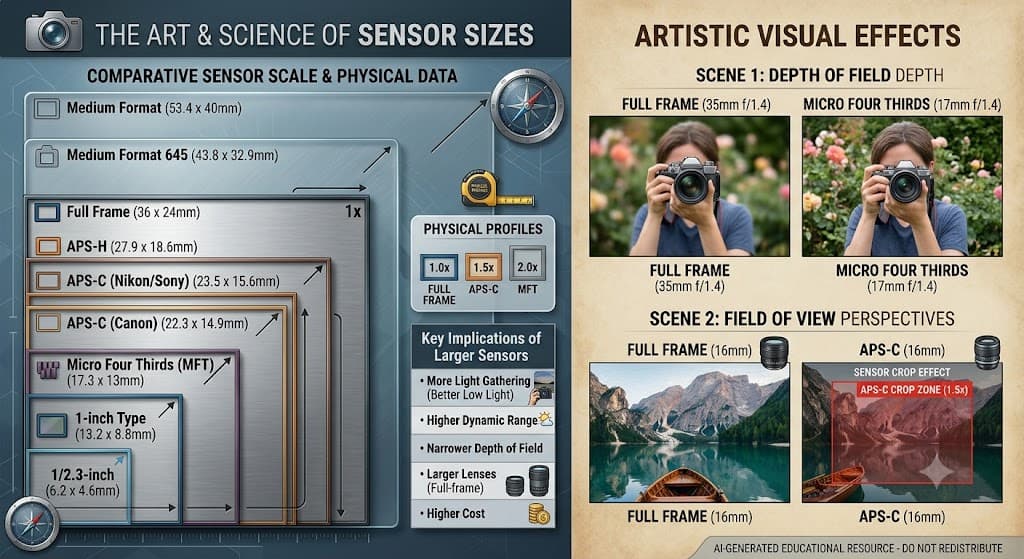
Look at that gap between the smartphone sensor and even an entry-level APS-C sensor. That's the actual reason a "proper camera" photo of Kathmandu Durbar Square at dusk looks cleaner and richer than the same shot on a phone — not because of a brand logo, but because a bigger sensor is physically catching far more light.
This is also exactly why phone cameras rely so heavily on software (night mode, portrait mode blur simulation) to fake what a bigger sensor does naturally.
DSLR: the traditional workhorse
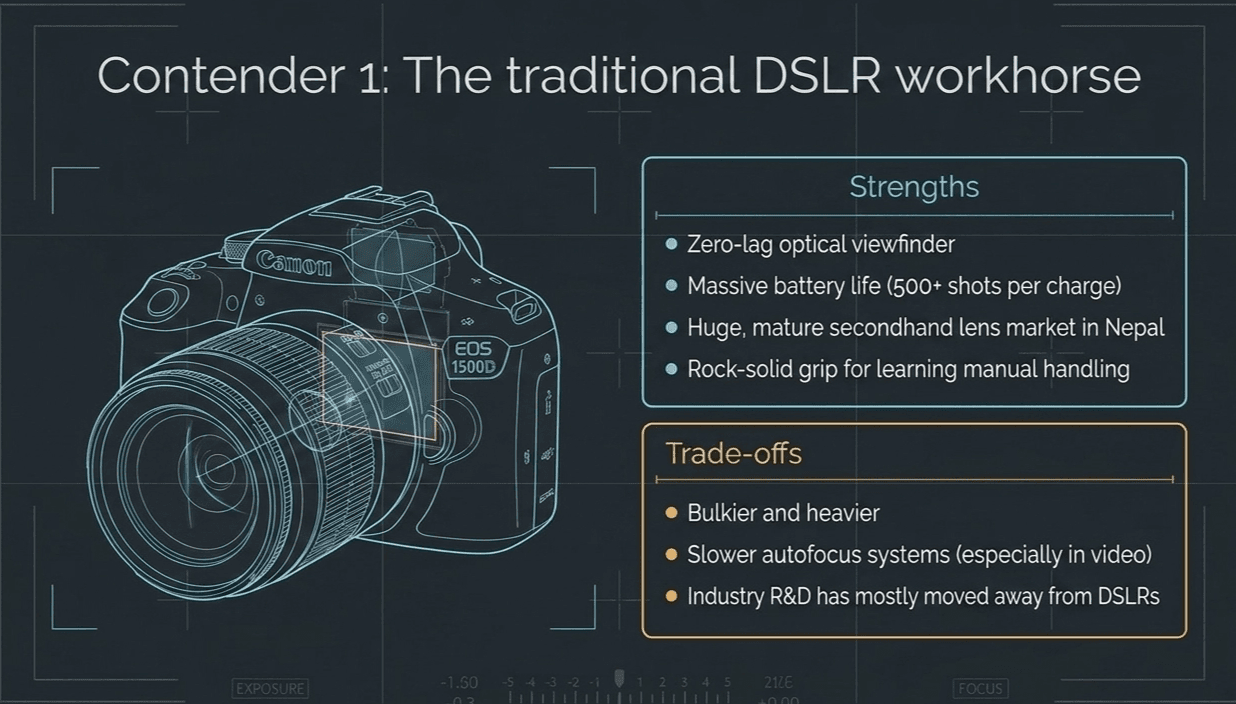
Example: Canon EOS 1500D / Nikon D3500 — common entry-level DSLRs still widely used by beginners in Nepal.
Strengths
- Optical viewfinder — no lag, no battery drain from an electronic screen while framing
- Excellent battery life (often 500+ shots per charge, since the screen isn't always on)
- Huge, mature secondhand lens market, which matters a lot in Nepal's gear economy
- Rock-solid grip and handling for beginners learning manual control
Trade-offs
- Bulkier and heavier than mirrorless equivalents
- Slower/older autofocus systems in entry-level models, especially in video mode
- Most manufacturers have shifted development focus to mirrorless, so lens innovation has slowed on the DSLR side
Mirrorless: where the industry has moved
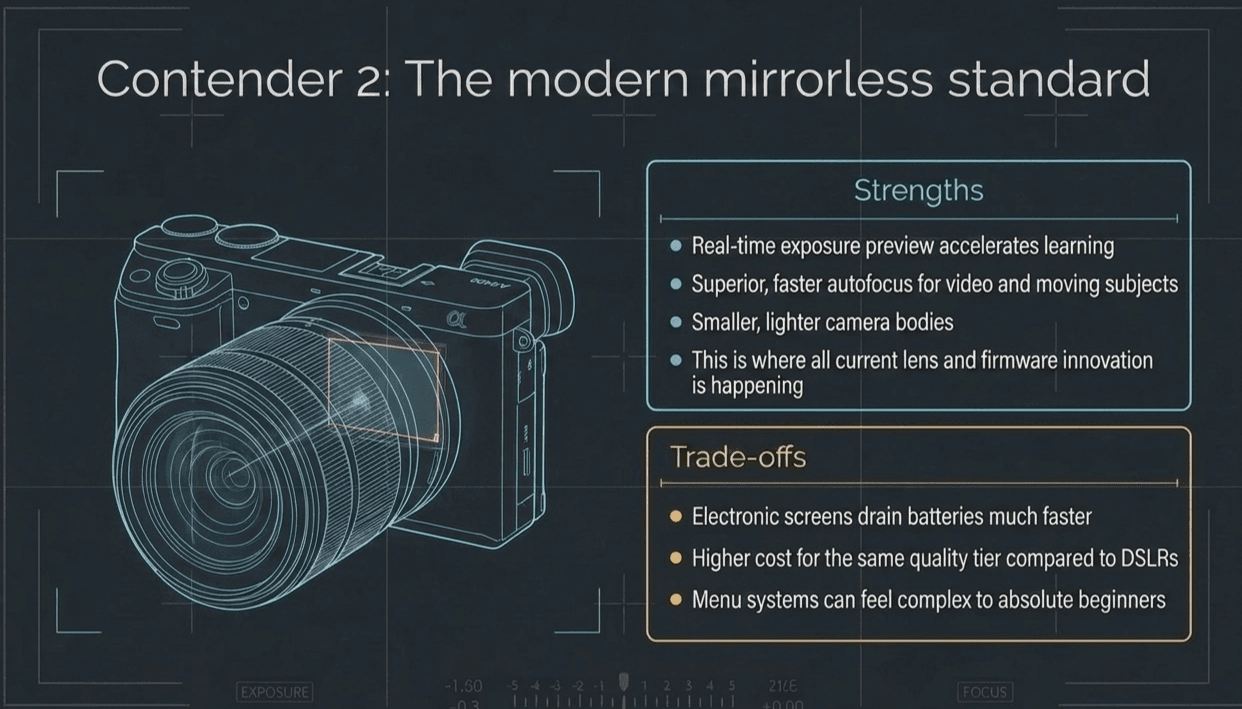
Example: Sony A6400, Sony FX3, Canon EOS R50 — mirrorless bodies now dominate professional and prosumer use, including at Zyamaru's own studio.
Strengths
- Real-time exposure preview — what you see on screen is what you'll get, which is genuinely faster for a beginner to learn exposure with
- Faster, more advanced autofocus, especially for video and moving subjects
- Smaller and lighter bodies
- This is where camera manufacturers are investing R&D now — better lenses, better firmware, faster releases
Trade-offs
- Electronic viewfinders and screens drain battery faster
- Generally pricier at the same quality tier compared to DSLR
- Menu systems can feel more complex to an absolute beginner
Smartphone: the camera you already own
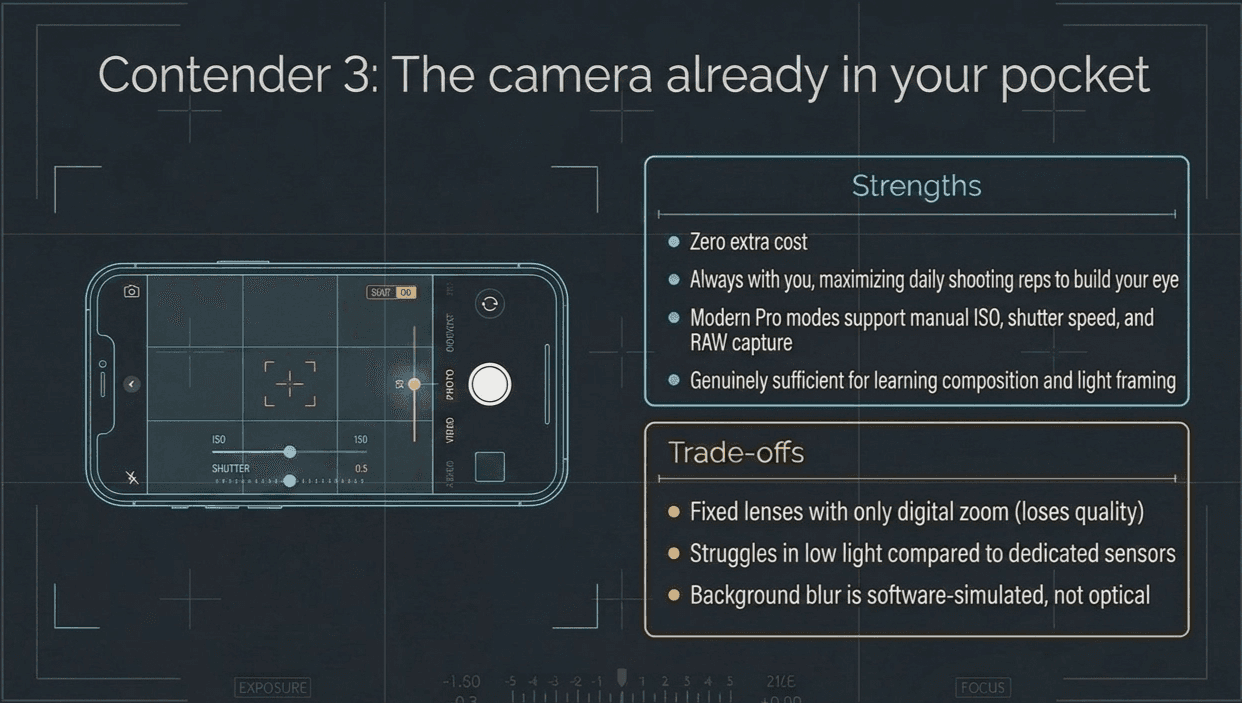
Example: any recent iPhone or flagship Android with manual/Pro mode.
Strengths
- Zero extra cost — you already own it
- Always in your pocket, which means more shooting reps, and reps are what actually build a photographer's eye
- Modern phones support manual control over ISO, shutter speed, and even RAW capture in Pro mode
- Genuinely good enough for learning composition, light, and framing — the core skills from Module 1
Trade-offs
- Fixed lens — no changing focal length optically, only digital zoom (which costs quality)
- Small sensor struggles in low light compared to a dedicated camera
- Limited manual control depth compared to a real camera body
- Background blur is usually software-simulated, not optically real
So which one should you actually buy first?
Here's the framework we teach at the academy, in order of priority:
- If you're not sure photography is "your thing" yet — don't buy anything. Shoot with your smartphone in Pro/Manual mode for a month. Learn exposure and composition first. This is genuinely how most working cinematographers we know started.
- If you're committing to learning seriously — an entry-level APS-C mirrorless (like a Sony A6400 or Canon R50) is the sweet spot in 2026: excellent learning tool, strong resale value, and it won't become obsolete the moment you improve.
- If budget is tight and you want maximum value per rupee — a secondhand entry-level DSLR (Nikon D3500, Canon 1500D) with a kit lens is still an excellent, durable way to learn manual controls without overspending.
- If you're aiming toward cinematography specifically — you'll eventually want a mirrorless or cinema-line body (like the Sony FX-series), since video autofocus, frame rate control, and log profiles are far more mature on mirrorless systems today.
The mistake to avoid
The single biggest mistake we see beginners make isn't picking the "wrong" camera — it's buying an expensive camera and then leaving it on Auto mode indefinitely. A 40,000 camera on Auto mode will not outperform a 0 smartphone in Manual mode, in terms of what it teaches you.
The camera is a tool. The skill — reading light, composing a frame, controlling exposure — is what Module 1 through Module 3 of this series is actually building in you. Gear upgrades matter far more once that foundation exists.
What comes next in this series
- Camera Anatomy 101 — every button and dial explained, whichever camera you choose
- Manual, Aperture Priority, Shutter Priority, Auto — which mode to actually shoot in
- RAW vs JPEG — why professionals never shoot JPEG-only
- How to Hold a Camera Properly — fixing blurry photos at the source
Bring your camera — any camera — to Zyamaru Films Academy
Whether you show up with a phone, a secondhand DSLR, or a brand-new mirrorless body, our Basic Photography to Cinematography course at Zyamaru Films Academy in Tahachal, Kathmandu meets you exactly where your gear is. We teach the fundamentals of light, exposure, and composition first — the skills that transfer to any camera you'll ever own — over one month, six days a week, with hands-on access to professional cinema equipment as you progress.
Turn Passion Into Profession.
Frequently asked questions
Can I learn photography seriously using only my smartphone?
Yes. Composition, exposure, and light — the core skills of photography — can all be learned on a smartphone with manual/Pro mode. A dedicated camera becomes valuable once you need more control over depth of field, low-light performance, or lens choice.
Is DSLR or mirrorless better for a complete beginner?
Both work well for learning. Mirrorless gives you a real-time exposure preview, which many beginners find easier to learn with, while DSLRs offer longer battery life and often lower secondhand prices.
Do I need to buy a new camera, or is secondhand okay for beginners?
Secondhand is genuinely a smart choice for beginners, especially entry-level DSLRs, which hold up well and are widely available in Nepal's secondhand gear market. Just have someone knowledgeable check the shutter count and sensor condition before buying.