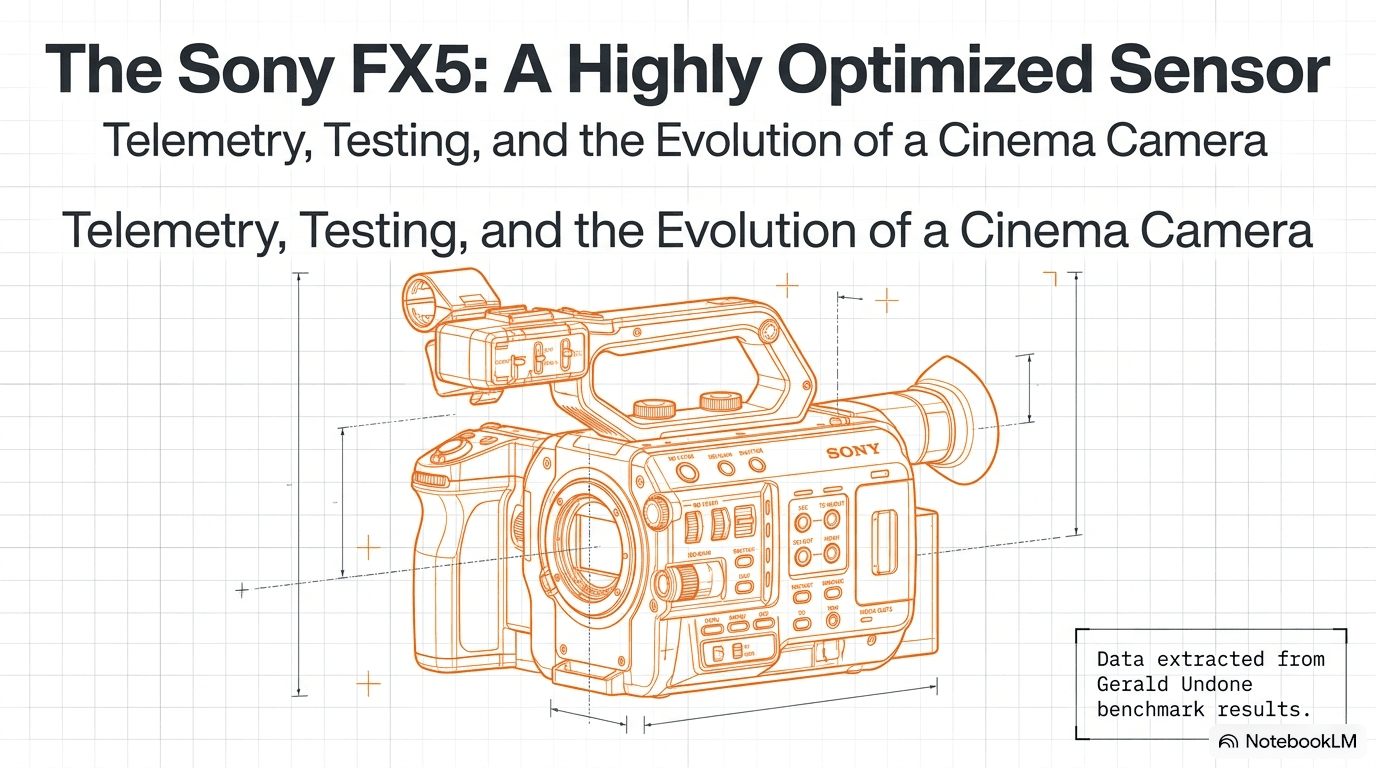
The Sony FX5: A New Standard for Cine Performance
For filmmakers waiting for the ultimate successor to the FX3, the Sony FX5 represents what reviewer Gerald Undone calls the "final chapter" of this generation’s camera technology. While its form factor might look familiar, under the hood, it is a significant leap forward in sensor optimization and professional workflow.
The 60MP Secret: An Over-Clocked Powerhouse
One of the most surprising revelations about the FX5 is its sensor heritage. It utilizes the same 60-megapixel sensor found in the a7R VI, though it is marketed as a 5K video camera. Sony achieves this by using a two-by-two pixel binning process to downsample the resolution to 5K, which is then oversampled to 4K.
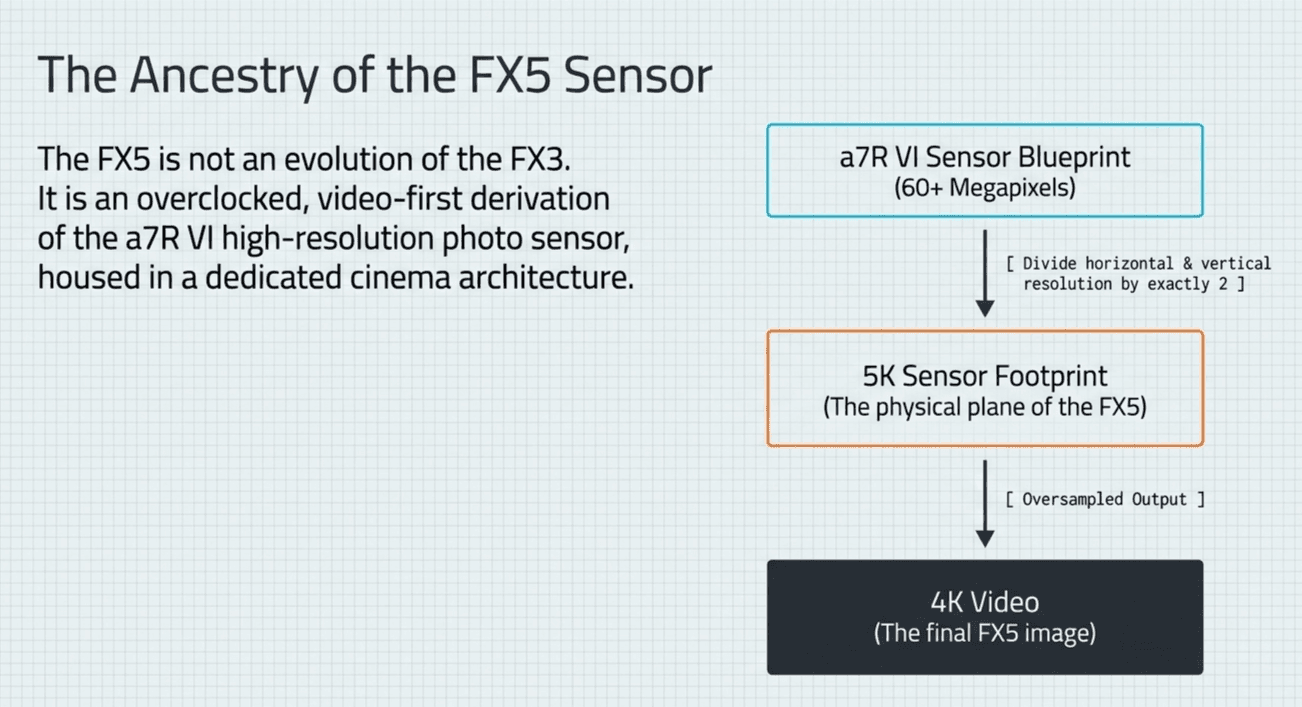
Crucially, the FX5 is essentially an "over-clocked" a7R VI. Thanks to a more robust connection and active internal cooling, it achieves faster read speeds than its photo-centric sibling, clocking in at 5.7ms in 4K full-frame mode compared to the a7R VI's 7ms.
Performance: Redefining Dynamic Range and Low Light
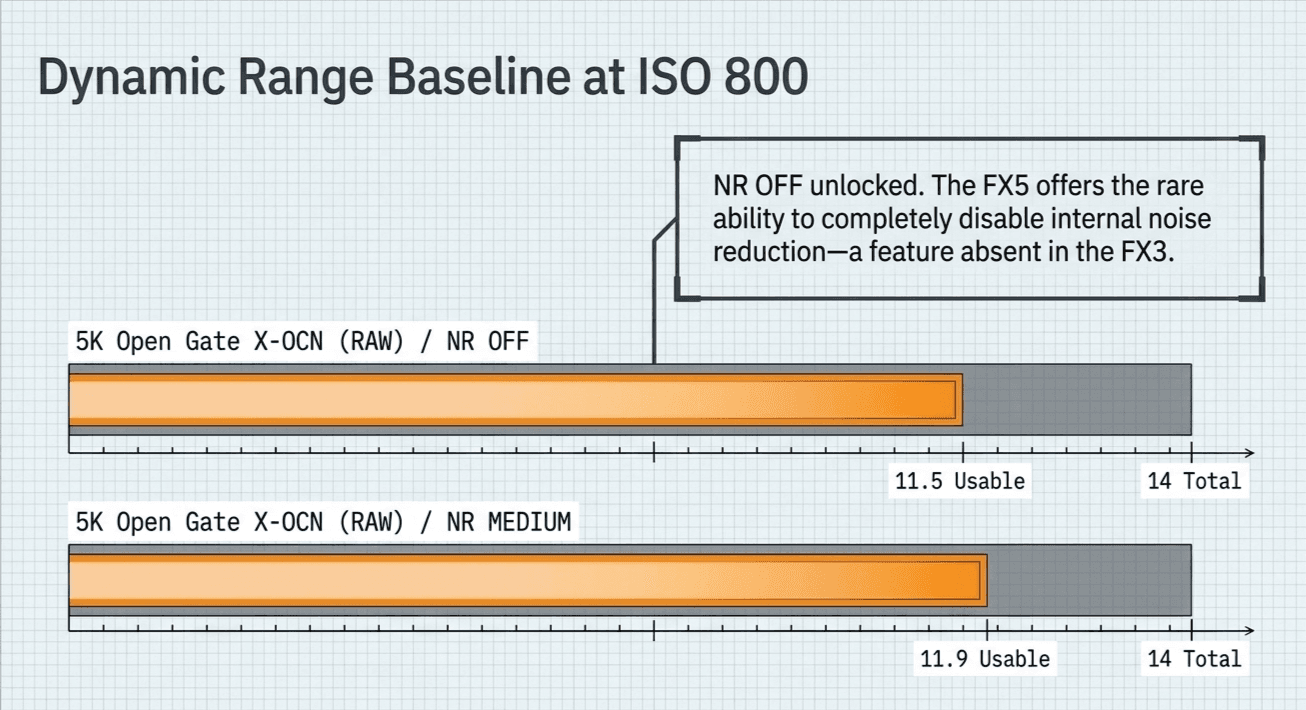
The FX5 introduces a Dual Gain mode that significantly boosts image quality. When enabled, the camera reads the sensor twice to merge high and low gain modes, resulting in 14 clean, usable stops of dynamic range.
Perhaps most impressive is its performance at high ISOs. In technical tests, the FX5’s low-light performance at ISO 12800 actually outperformed the FX3, producing cleaner results with higher noise tolerance.
Pro Workflow: Internal RAW and Open Gate
Unlike previous Alpha-series hybrids, the FX5 is a dedicated cinema tool featuring:
- Internal RAW (X-OCN): High-quality recording without external recorders.
- Open Gate Recording: Utilizing the full 3x2 aspect ratio of the sensor, ideal for anamorphic shooting or flexible cropping.
- Cine Menu System: It moves away from the Alpha menus in favor of the professional interface found on the FX6 and Burano, offering features like face-only autofocus and the ability to completely turn off noise reduction.
Hardware and Ergonomics
The FX5 features Sony’s best screen to date—a bigger, brighter display that uses the a7R VI’s multi-angle mechanism to flip, rotate, and tilt in any direction. While it lacks a rear thumb wheel, it prioritizes a professional multifunction wheel designed for cinema workflows.
Pushing the Speed Limit: Rolling Shutter on the Sony FX5 II
What the FX5’s readout speeds actually mean for cinematographers on set
A Sensor Built for Versatility, Not Just Speed
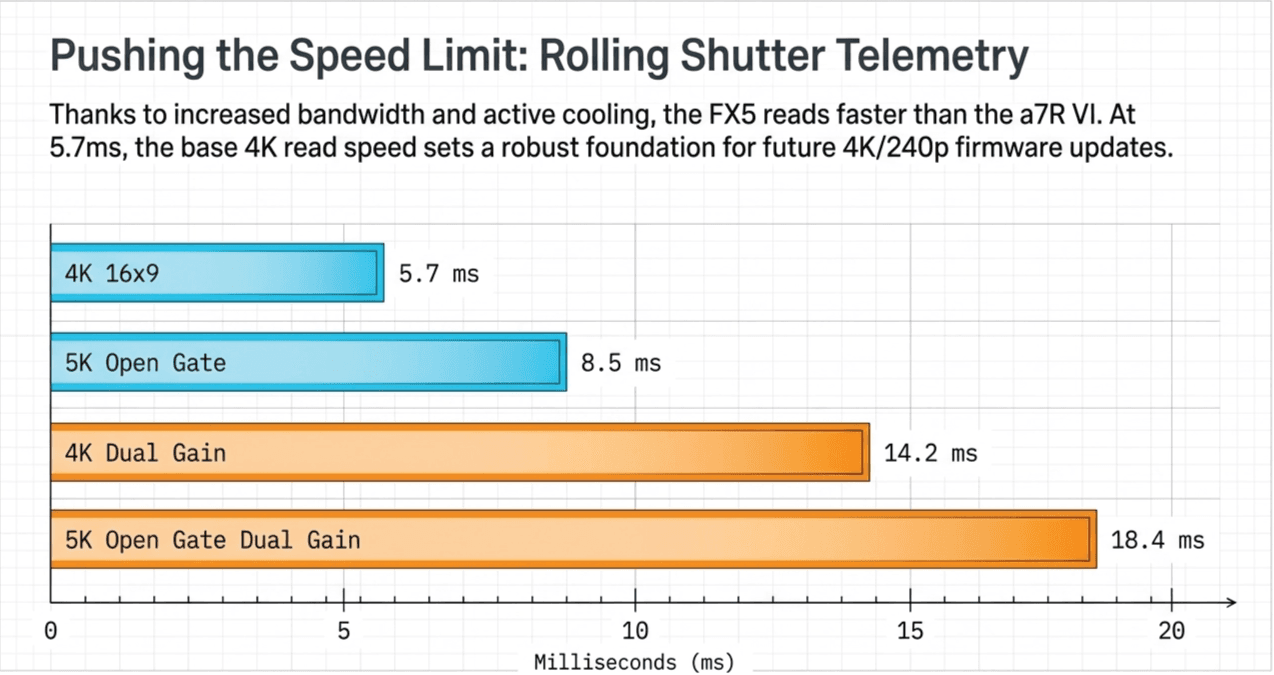
Sony's latest telemetry on the FX5 II reveals a sensor engineered to balance speed and dynamic range rather than chase raw numbers alone. In its base 4K 16x9 mode, the sensor reads out in just 5.7 milliseconds — a genuinely fast figure that puts it ahead of Sony's own a7R VI, thanks to increased bandwidth and active cooling built into the FX5 II's design. In practical terms, this means cleaner handling of fast pans, whip movements, and rolling-shutter-prone action, without the "jello effect" that plagues slower-reading sensors.
Switch to 5K Open Gate and that readout time stretches to 8.5 milliseconds — a reasonable trade-off given the larger sensor area being scanned for the wider frame. It's still fast enough for most run-and-gun documentary and narrative work, though fast whip pans will show slightly more skew than in standard 4K.
The Dual Gain Trade-Off
The real story in this data is what happens when Dual Base ISO is switched on. Enabling Dual Gain for extended dynamic range pushes the 4K readout to 14.2 milliseconds, and 5K Open Gate Dual Gain all the way to 18.4 milliseconds — more than triple the base rate.
This makes technical sense: Dual Gain requires reading each pixel twice, once at each ISO, then merging the highlight and shadow information into a single frame. That extra pass through the sensor is what buys the additional stops of dynamic range — but it comes at the direct cost of readout speed.
The Numbers at a Glance
| Shooting Mode | Readout Speed | Best Use Case |
|---|---|---|
| 4K 16x9 | 5.7 ms | Fastest readout — safest for handheld & action |
| 5K Open Gate | 8.5 ms | Wider frame, moderate rolling shutter risk |
| 4K Dual Gain | 14.2 ms | Extended dynamic range, visible skew on fast motion |
| 5K Open Gate Dual Gain | 18.4 ms | Maximum DR, best for static/slow-moving shots |
What This Means on Set
- Handheld, action, or fast-motion work: stick to standard 4K 16x9 for the cleanest rolling shutter performance.
- Static interviews, landscapes, or slow, deliberate camera moves: Dual Gain modes are excellent for squeezing out extra dynamic range.
- 5K Open Gate: a strong middle ground when you need reframing flexibility in post, without the full DR penalty of Dual Gain.
- Always test your specific shot type before committing — rolling shutter artifacts are far easier to avoid on set than to fix in post.
The FX5 isn't just an incremental update; it’s a highly balanced machine that chooses read speed and reliability over extreme oversampling. For those already in the Sony ecosystem, it provides the missing features—like Open Gate and internal RAW—that bring Sony to the forefront of the competitive cinema market.
The Takeaway
The FX5 II doesn't just read faster than its stablemate — it gives cinematographers a genuine choice between speed and dynamic range, mode by mode. Knowing which trade-off you're making before you roll is what separates a clean, professional image from a distracting one. At Zyamaru Films Academy, understanding telemetry like this is exactly the kind of technical literacy we build into our curriculum, because knowing your gear's limits is just as important as knowing your shot list.